
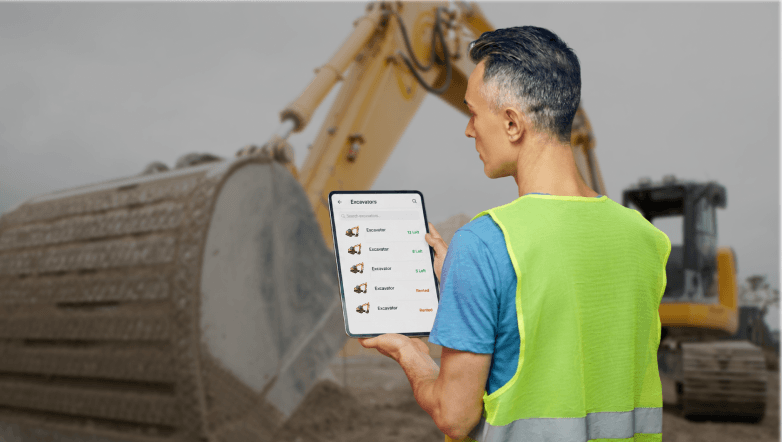
The Asset Visibility Problem: You Can’t Rent What You Can’t Find
For rental companies, asset availability is only useful if it is visible in real time. The teams must be able to quickly confirm where the equipment is, whether it is ready, or when it will return. Otherwise, revenue slips through the cracks.
Rental businesses think it is an inventory problem, but it is often a visibility problem. Owning enough assets is not enough. Confidence in asset location, status, maintenance condition, and true availability is crucial.
NetScore Rental Management for NetSuite addresses the issue. The solution helps rental businesses track asset availability within the ERP environment.
Core problem
Many rental companies operate with partial or delayed information about their fleet. This creates uncertainty across dispatch, service, sales, and operations. They find it hard to promise availability or allocate the right equipment.
Staff spend too much time calling, checking spreadsheets, or relying on memory. What should be a straightforward rental decision turns into guesswork.
Why this matters
Poor visibility creates lost revenue opportunities. Available equipment may not appear available to the team trying to rent it out. Customers get frustrated when they receive conflicting answers, delayed confirmations, or last-minute changes. Only way to avoid that is through better tracking and status visibility.
This problem also compounds over time. Visibility gaps lead to lower utilization, missed rental days, and idle assets.
Key challenges
- Asset tracking challenges: Equipment moves around. It moves between yards, job sites, service bays, and customer locations.
- Availability uncertainty: Uncertain status. An item marked as available may still be in transit, awaiting inspection, or due back later. This weakens booking confidence.
- Utilization blind spots: Reduced utilization. With uncertain visibility, asset utilization information is also unclear. Whether an asset is overused, underused, or stranded in the wrong location is unclear. This reduces overall fleet productivity.
- Lost equipment risks: Smaller assets go missing. With unprecise visibility, it is difficult to manage small assets. Sometimes tools, attachments, or mobile assets disappear, remain unbilled, or go unreturned.
- Resource allocation: Incomplete data affects allocation. Dispatchers and operations teams struggle to assign resources when decisions need complete data. The right equipment may not reach the right branch, customer, or delivery window.
- Fleet accountability: Shared accountability suffers. When no one fully trusts the system status of an asset, it is difficult to fix accountability. Accountability involves teams across operations, yard staff, drivers, and service teams.
- Maintenance visibility: Uncertain maintenance status. If maintenance status is not tied clearly to asset availability, allocation gets erratic. Equipment can be promised too early or sit too long after service. This reduces its revenue-generating use.
- Revenue implications: Uncertain availability impacts revenue. Due to lost rental days, avoidable downtime, rushed substitutions, and weaker customer retention.
Business impact
A visibility gap changes how confidently a business can sell. Clear availability means having instant answers. To questions like “Where is it?”, “Is it ready?”, and “Can I commit this asset now?”. That becomes a competitive advantage.
The strongest rental businesses treat visibility as a revenue system. Better asset visibility means the following-
- stronger utilization,
- fewer losses,
- accurate maintenance planning, and
- a customer experience built on certainty rather than apology
Conclusion
The rental opportunity is simple: every asset should be easy to find, easy to trust, and easy to deploy. Otherwise, it is revenue lost on equipment they already own.
NetScore Rental Management provides asset tracking and maintenance visibility. It brings a NetSuite-based workflow that improves both operational control and customer experience.
FAQ’S
1. What is a rental management system?
Rental management system is a software that manages rental inventory, reservations, contracts, billing, and returned rental items in one place instead of across spreadsheets and manual tools.
Modern systems give you real-time visibility into what assets you own, where they are, and whether they’re available, so your team can stop guessing and start renting with confidence.
2. How does a rental management system improve asset visibility?
Rental management systems track each asset’s location, status (available, reserved, on rent, in maintenance), and usage history in real time, often using barcodes, RFID, or GPS.
That live asset picture reduces “lost” or misplaced equipment, prevents double-bookings, and helps teams quickly answer the most important question in rental: what can I rent out right now?
3. What are the warning signs that we’ve outgrown manual rental tracking?
Red flags include frequently “losing” assets on paper, discovering items only when they come back unexpectedly, double-booked equipment, billing errors, and heavy reliance on one person’s memory or personal trackers.
You may also see under‑utilized assets, rushed last‑minute purchases, and frustrated customers because no one has a trustworthy, real-time view of what’s actually available to rent.

 © 2026 NetScore Technologies
Leave a Reply
Want to join the discussion?Feel free to contribute!